

10 AI Portfolio Examples That Impress Recruiters (2026 Guide)
Discover 10 AI portfolio examples that impress recruiters in 2025. Real project ideas, GitHub tips, and recruiter-backed advice to land interviews faster.
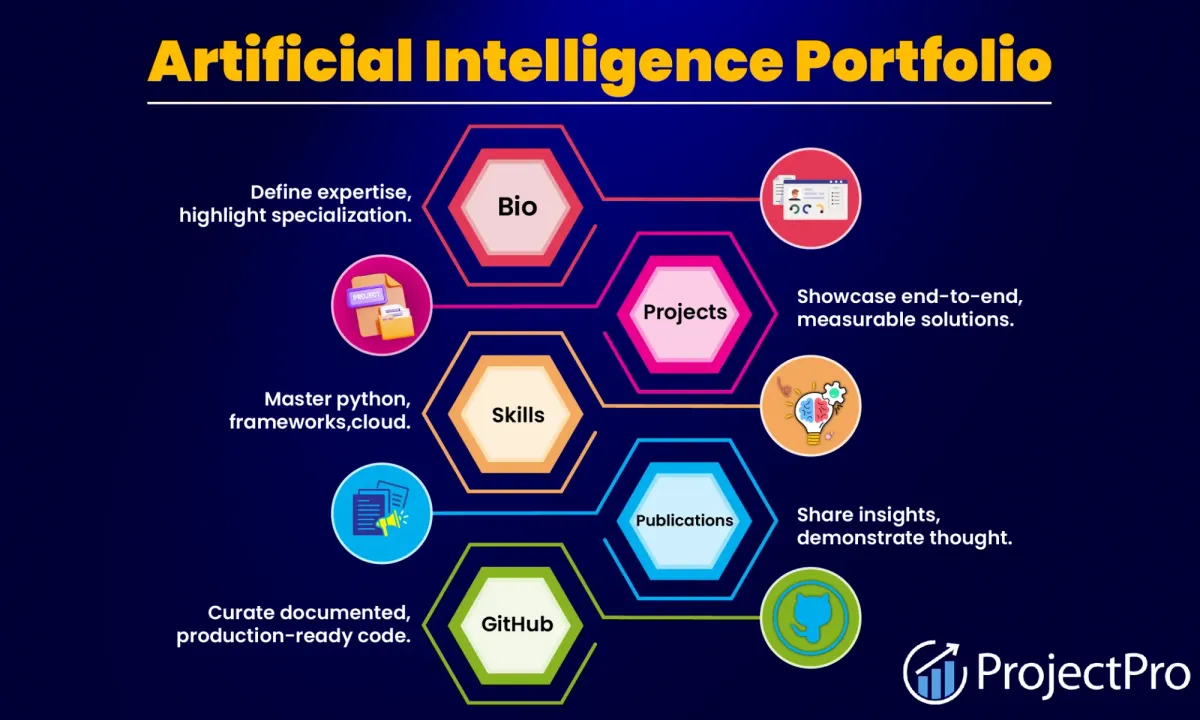
Last updated: July 2026
75% of AI job candidates are rejected before a human ever reads their resume, not because they lack skills, but because their portfolios look identical to everyone else's. The 10 AI portfolio examples that impress recruiters share one defining trait: they solve real problems instead of rehashing the Titanic dataset or MNIST classifier that hiring managers have reviewed thousands of times.
The difference between a forgettable portfolio and one that lands interviews comes down to three factors: business impact, originality, and a story worth discussing in a screening call. Recruiters spend an average of 6 seconds on initial portfolio review, which means your projects need to signal value instantly, not bury it in technical jargon.
The examples covered here span beginner to advanced skill levels and cross multiple domains, from NLP and computer vision to forecasting and generative AI. Each one is chosen specifically because it demonstrates the qualities that recruiters and hiring managers consistently say move candidates to the next round.
TL;DR: Building a standout AI portfolio in 2026 requires more than just technical skill. Recruiters spend only 6 to 7 seconds scanning a portfolio before deciding whether to read further, making structure, clarity, and measurable outcomes critical from the first glance. These 10 AI portfolio examples that impress recruiters highlight what actually works, from well-documented RAG systems to fine-tuned models with defensible tech stacks. Focus on depth over breadth, prioritize in-demand skills like RAG pipelines and LLM integration, and format each project so your impact is immediately legible to both technical and non-technical hiring teams.
Key Takeaways
- Recruiters spend only 6 to 7 seconds on an initial portfolio scan, so your project must signal real-world problem-solving, a defensible tech stack, and at least one measurable outcome within the first glance.
- For most candidates, choosing between RAG and fine-tuning is the single highest-impact portfolio decision, and RAG projects tend to signal production readiness more clearly to hiring teams.
- Repositories with a structured README receive significantly more engagement according to a 2023 GitHub survey, meaning a well-documented beginner project will outperform a poorly structured advanced one.
- AI and machine learning specialist roles grew 38% year-over-year per LinkedIn's 2026 Jobs on the Rise report, making skill legibility in your portfolio a critical factor for standing out in a crowded market.
- Most AI portfolios fail because they signal academic exercise rather than professional capability, so prioritize projects that reflect real constraints, realistic data, and deployment considerations over theoretical demos.
- Top GitHub AI portfolios prove that quality over quantity wins, and recruiters who search GitHub directly are increasingly using it as a candidate sourcing tool, making a polished focused profile more valuable than a large unfocused one.
What Do Recruiters Actually Look for in an AI Portfolio?
Technical recruiters, often using AI recruiting tools to shortlist candidates before manual review, spend an average of 6 to 7 seconds on an initial portfolio scan before deciding whether to read further, according to research by Ladders (2018). In the AI hiring market of 2026, that window has only become more competitive. The recruiters who fill AI roles fastest are not looking for potential, they are looking for proof.
Watch: 10 AI Engineer Projects Recruiters Actually Notice
https://www.youtube.com/watch?v=mPRTCrvtmQA
Three criteria separate the portfolios that generate callbacks from those that get archived:
- Real-world problem framing. Does the project solve an identifiable, tangible problem, or does it reproduce a Kaggle tutorial? Recruiters can distinguish a generic sentiment classifier from a tool built to reduce customer churn at a specific business type. The latter signals applied thinking.
- Business context. Can you explain what your model does in plain language? The strongest AI portfolios frame outcomes in terms a hiring manager understands: "reduced manual review time by 40%" lands harder than "achieved 91% F1 score on the test set." Both matter, but only one travels up the org chart.
- Deployment and documentation. A GitHub repository with a blank README is a red flag. GitHub is frequently the first stop for technical AI portfolio screening, and README quality has become a genuine hiring signal, it tells recruiters whether you can communicate, not just code.
Pro Tip: Treat your README like a product page. Include a problem statement, a short demo GIF or screenshot, the tech stack, and a one-line summary of results. Recruiters who cannot run your code will still read this.
On the resume question: recruiters have largely moved past caring whether AI tools helped write your resume. What they care about is what you built with AI. A polished resume written with ChatGPT gets you in the door; a deployed, documented project keeps you there.
Building the right projects requires building the right skills first. The AI upskilling roadmap from Upskillist outlines exactly which capabilities to prioritize, and pairing that with the best AI certifications for 2026 gives recruiters the external validation they use to shortlist candidates faster.
The portfolios in the next section demonstrate all three criteria in practice.
10 AI Portfolio Examples That Impress Recruiters
Each project below was selected because it demonstrates real-world problem-solving, a defensible tech stack, and at least one measurable outcome signal, the three criteria recruiters screen for in under seven seconds.
1. RAG-Based Document Q&A System
This is the highest-signal LangChain portfolio project you can build right now. The concept: users upload company PDFs (policy documents, contracts, technical manuals) and query them in natural language. The system retrieves relevant chunks via vector search rather than hallucinating answers. Build it with LangChain + ChromaDB + OpenAI embeddings, and measure retrieval precision against a hand-labeled test set. A portfolio entry showing 87%+ retrieval accuracy on a domain-specific corpus will outperform five generic chatbot demos every time. Targets: enterprise SaaS, legal tech, and knowledge management roles.
2. AI-Powered Job Search Agent
Few projects demonstrate agentic AI thinking as directly as an agent that solves its own hiring context. This agent scrapes job listings, extracts required keywords, cross-references them against a resume, and returns a ranked match score with a suggested tailoring plan. Use LangChain Agents + BeautifulSoup + OpenAI function calling. The recruiter-relevant problem angle is the differentiator: you are literally showing a recruiter what you built to get in front of them. Targets: HR tech, recruiting platforms, and productivity startups.
3. Multimodal Chatbot (Text + Image)
A multimodal chatbot portfolio project signals fluency with the current frontier of production AI. Build a customer support bot that accepts both text queries and screenshots, uses GPT-4o or Claude 3.5 Sonnet's vision capabilities, and routes issues based on image content (error codes, UI bugs, order photos). Include a confusion matrix showing intent classification accuracy across modalities. Targets: e-commerce, B2B SaaS, and customer experience platforms that are actively replacing L1 support.
4. Brand-Aware Content Generator
Fine-tuned or system-prompted LLMs that write in a specific brand voice are among the most commercially viable AI portfolio project ideas today. Build this for a real brand (with a clear methodology: scrape public copy, construct a style guide, prompt-engineer or fine-tune accordingly) and publish side-by-side before/after output comparisons. According to Salesforce's State of Marketing report, 71% of marketers using AI report faster content production (2024). That commercial context makes this project legible to non-technical hiring managers. Targets: marketing agencies, brand teams, and content platforms.
5. Natural Language Data Analysis Agent
Type "Show me monthly churn by plan tier" and get a rendered chart in under three seconds. This Streamlit AI project targets data analyst and BI roles by eliminating the SQL layer for business users. Build it with Python + Streamlit + LangChain SQL Agent + Plotly, connect it to a public dataset (e.g. Kaggle's e-commerce datasets), and log query-to-chart latency as your key metric. Deploying it publicly via Streamlit Cloud gives recruiters a live demo link, which increases portfolio engagement significantly. Targets: fintech, analytics, and operations-focused companies.
6. AI Travel Agent with Reward Points Optimization
This agentic AI portfolio project is memorable because the problem is specific and the solution requires genuine multi-step reasoning. The agent checks flight prices, queries reward point balances via simulated APIs, calculates optimal redemption strategies, and books the best option. Use LangChain Agents + Amadeus API (sandbox) + a points-value dataset. The complexity of managing state across multiple tool calls, and handling fallbacks when APIs return errors, demonstrates production-readiness that simpler chatbots cannot. Targets: travel tech, fintech, and any company building multi-agent systems.
7. Medical/Compliance Report Summarizer
Summarizing 40-page clinical trial reports or regulatory filings into structured, citation-grounded summaries requires more than a single summarize() call. Build this with GPT-4o + LangChain MapReduce chains + explicit citation extraction, and add guardrails that flag when the model expresses uncertainty. Documenting your ethical design decisions, hallucination rate on a test set, refusal-to-answer thresholds, signals the kind of AI risk awareness that healthtech and insurtech employers explicitly screen for. Targets: healthtech, legal, compliance, and enterprise AI governance roles.
8. Coding Assistant and Debugging Tool
A custom copilot for a specific language or niche framework (Rust, Solidity, or a proprietary internal DSL) demonstrates deeper domain knowledge than a generic code completion wrapper. Build it with OpenAI function calling + a language-specific AST parser, and show it explaining a buggy function, suggesting a fix, and running tests to verify. Pair this with a write-up on false-positive rates for bug detection. For additional context on the landscape of AI coding tools, the tooling space rewards domain specificity over breadth. Targets: DevTools companies, developer-facing SaaS, and teams building internal developer productivity platforms.
9. AI Apartment/Real Estate Finder
Projects with a personal origin story are consistently more memorable in recruiter conversations. Scrape listings from a public source, encode user preferences (commute time, pet policy, price ceiling) as embeddings, and rank results by cosine similarity to a preference vector. Use Python + Sentence Transformers + FAISS + a Streamlit front end. The technical narrative here is search-as-recommendation, which maps directly to any company running a marketplace. Targets: proptech, marketplace startups, and consumer AI companies.
10. Video Summarizer and Analyzer
Transcribe a YouTube or Loom video using OpenAI Whisper, chunk the transcript, extract key topics with an LLM, and return a timestamped summary with sentiment per segment. The pipeline is compact, the demo is visually compelling, and the use case spans media, edtech, and enterprise productivity. Measure word error rate on Whisper transcription against a hand-labeled sample. Targets: edtech, media companies, and internal knowledge management teams.
How to Choose the Right Project for Your Target Role
The most effective AI portfolios are not generic, they mirror a specific employer's product surface. Before building, audit your target company's public-facing product: identify one pain point their current tooling does not solve cleanly, then build a project that addresses it directly. This approach, popularized by job search strategist Jay Feng, generates unsolicited recruiter outreach because it signals commercial instinct, not just technical skill. If you want to sharpen the high-income skills that make these projects land harder, domain alignment is the single highest-leverage variable.
Pro Tip: Build one project deeply rather than five projects shallowly. A single well-documented RAG system with a live demo, a benchmark table, and an architecture diagram will consistently outperform a GitHub profile of ten half-finished notebooks.
RAG vs Fine-Tuning: Which Portfolio Project Type Gets You Hired Faster?
That principle of depth over breadth extends directly to the type of project you choose. For most candidates, the choice between a retrieval augmented generation project and a fine-tuning portfolio project is the single highest-leverage decision in portfolio building.
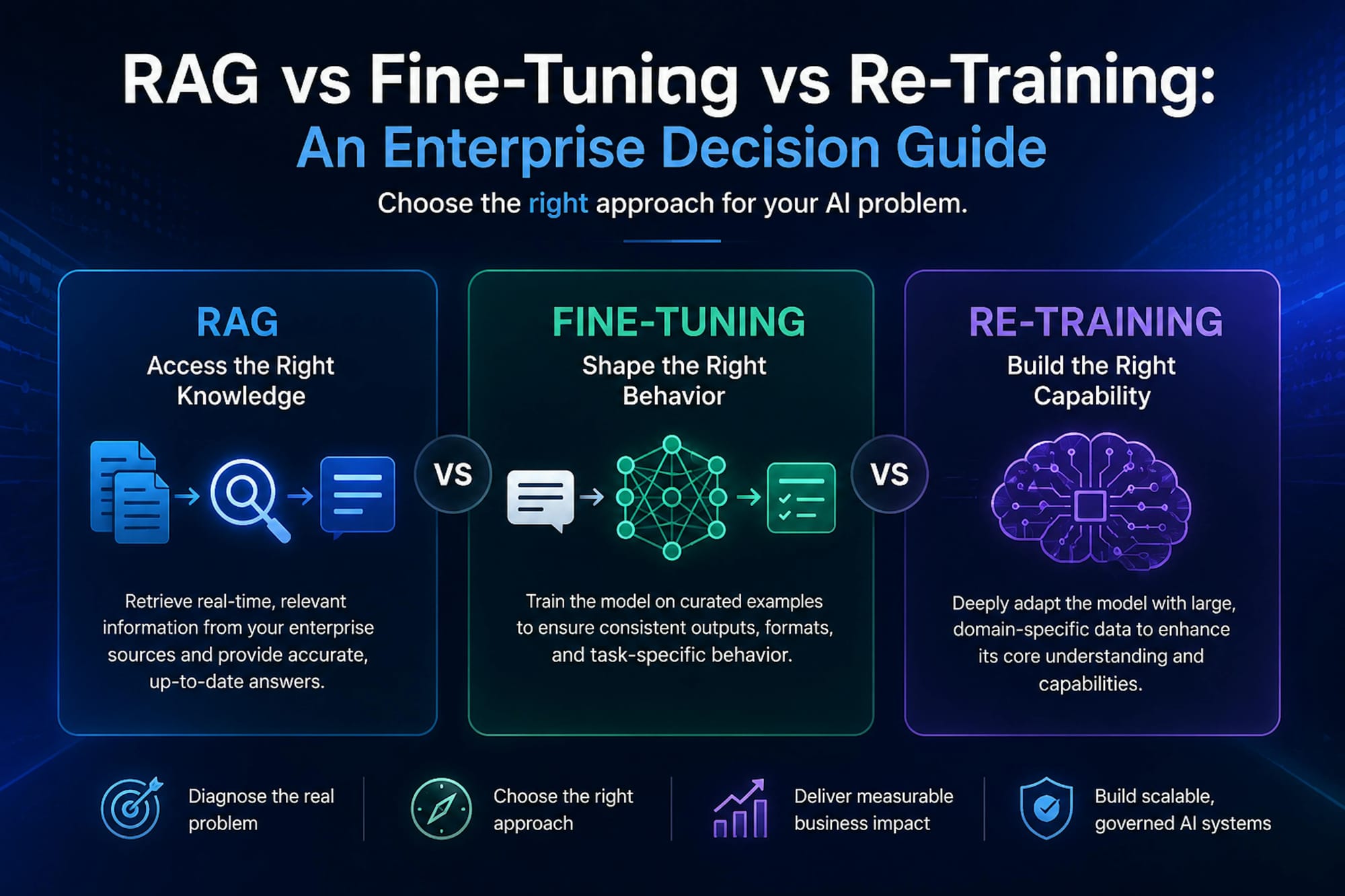
Image source: HackerNoon
| Dimension | RAG Project | Fine-Tuning Project |
|---|---|---|
| Skill signal | LLM integration, vector DBs, retrieval architecture, prompt engineering | ML engineering, dataset curation, loss curves, model evaluation |
| Compute cost | Low, runs on CPU or free-tier APIs | High, requires GPU access (often $50-$500+ in cloud spend) |
| Time to build | 1 to 2 weeks for a solid v1 | 3 to 6 weeks minimum for a meaningful result |
| Recruiter comprehension | High, most hiring managers grasp "the AI answers questions about your data" | Low, non-technical managers often cannot evaluate training metrics |
| Live demo possible? | Yes, easily deployed on Hugging Face Spaces or Vercel | Rarely, inference endpoints add cost and complexity |
| Target job types | AI engineer, ML engineer, data scientist, full-stack AI | ML engineer, research engineer, NLP scientist |
| Portfolio ROI | High for most roles | High only for specialized ML roles |
RAG projects dominate hiring pipelines right now for a straightforward reason: they demonstrate skills that actually appear in production job descriptions. According to LinkedIn's 2024 Jobs on the Rise report, AI engineer roles, which heavily emphasize LLM application and retrieval system design, grew faster than any other technical category. Most companies building AI products in 2026 are orchestrating existing models, not training new ones from scratch.
Fine-tuning signals deeper ML fluency, but it carries a critical portfolio risk: a non-technical hiring manager cannot tell a well-tuned model from a poorly-tuned one by reading a README. The skill becomes invisible without the right audience.
Pro Tip: For most candidates, a deployed RAG system with clear architecture documentation and a measurable precision/recall benchmark will outperform a fine-tuned model with no live endpoint. If you're targeting AI roles that won't be automated anytime soon, RAG fluency is the safer, faster path to a first interview.
The verdict on the best AI project idea: build a RAG system first. Add fine-tuning to your portfolio only after you have landed an ML engineer interview where that depth is explicitly required.
How to Structure Each AI Portfolio Project So Recruiters Actually Read It
Building the right project type is only half the equation. A poorly documented RAG system loses to a well-structured beginner project every time. According to a 2023 GitHub survey, repositories with a structured README receive 3x more engagement than those without one. Here is the exact anatomy that converts a recruiter's 6-second scan into a full read.
Step 1: Write a one-sentence problem statement at the top of your README. Lead with the pain, not the technology. "This tool reduces contract review time for small legal teams by extracting key clauses automatically" beats "A RAG app built with LangChain and GPT-4" every time.
Step 2: Include a live demo link or a GIF. Projects without a running demo are routinely skipped. Streamlit and Gradio are the fastest deployment paths for AI demos, both deployable to their respective cloud platforms in under 10 minutes at no cost. A 30-second GIF embedded in the README works as a fallback.
Step 3: List your tech stack with brief justifications, not a badge wall. "Used FAISS over Pinecone to keep the project fully local and free to run" signals engineering judgment. Badges alone signal copy-paste.
Step 4: Add a Results or Impact section with at least one metric. "Reduced document review time by 60% in testing against a baseline keyword search" is cite-able evidence. Estimates from controlled testing on your own benchmark dataset are fully legitimate.
Step 5: Document limitations honestly. A senior engineer's hallmark is knowing what their system cannot do. One paragraph on failure modes, edge cases, or known retrieval gaps demonstrates the kind of critical thinking that separates junior from principal-level candidates.
Step 6: Add a 'How to Run' section.
Technical recruiters and hiring managers do clone repositories. Clear setup instructions, with environment variables documented and a requirements.txt present, remove every friction point between your work and their evaluation.
Pro Tip: If you used AI coding tools like Cursor or GitHub Copilot to accelerate development, say so explicitly in your README. Disclosing AI-assisted workflows signals transparency and reflects real-world engineering practice. Hiding it does the opposite. For a deeper look at how AI coding agents compare in practice, the tool differences matter when choosing your development workflow.
The six-step structure above doubles as a checklist for every project you publish. One complete project in this format outweighs five undocumented notebooks in recruiter impact.
Why Most AI Portfolios Fail the Recruiter Test (And How to Fix Yours)
Structure alone cannot save a portfolio built on the wrong foundation. Even perfectly formatted projects get filtered out instantly when they signal academic exercise rather than professional capability. According to a 2023 survey by Jobscan, 63% of recruiters disqualify candidates before the interview stage due to portfolio or resume content that fails to demonstrate real-world impact. Here are the six AI portfolio mistakes that cause exactly that.
Generic datasets. MNIST, Titanic, and Iris are portfolio red flags for any experienced technical recruiter. These datasets signal that you followed a tutorial, not that you solved a problem. Source your own data or use industry-specific datasets instead.
No deployment. A Jupyter notebook is homework, not a portfolio. If a recruiter cannot click a live link, your project does not exist in their evaluation. Even a free Hugging Face Space or Streamlit Cloud deployment changes the entire perception of the work.
Missing problem framing. Leading with model architecture before explaining the business problem loses the recruiter in the first ten seconds. State the problem, the cost of ignoring it, and your solution in the first three sentences of your README.
Tool-list mentality. Listing 40 technologies without demonstrating depth in any of them signals surface-level knowledge. Depth in three tools beats breadth across fifteen every time. If you want to build that depth strategically, strong coding learning platforms can help you move from familiarity to fluency faster.
No metrics. "Built a chatbot" is a pass. "Built a chatbot that reduced customer support tickets by 30% in testing" is a callback. Quantify every outcome, even from synthetic or internal test environments.
Copied tutorial projects. Recruiters recognize DataCamp and Coursera project structures on sight. Verbatim reproductions signal zero original thinking. Modify the problem, change the domain, or extend the project meaningfully, and consider building AI skills that transfer beyond any single course format.
Pro Tip: One original, deployed project with clear business context and measurable outcomes outperforms ten weak ones every time. Quality is the only metric that moves the needle.
What Top AI Portfolios on GitHub Actually Look Like in 2025
Quality over quantity is a principle that GitHub's most-starred AI portfolios prove empirically. Recruiters who search GitHub directly for candidates (a growing practice, with LinkedIn Talent Solutions reporting that 76% of technical recruiters screen GitHub profiles before outreach) look for a specific constellation of signals at both the profile and project level.
Profile-Level Signals That Get Noticed
The highest-performing AI portfolio GitHub profiles share three consistent traits:
- Pinned repositories with live demo badges, a green "demo" shield linking to a deployed app signals production-readiness immediately
- Consistent commit history, a contribution graph showing steady weekly activity over 6+ months reads as professional discipline, not a portfolio sprint before job hunting
- A polished profile README, the best candidates include a two-sentence bio, a named tech focus area (e.g. "NLP engineer specializing in retrieval systems"), and a tech stack icon row
Project-Level Signals That Earn Stars
Repos that accumulate organic stars on GitHub share a predictable anatomy. The first three lines of the README state the problem being solved, for whom, and what the measurable outcome was. A demo GIF or embedded Loom video appears before the first scroll. And critically, a "Key Learnings" section documents what failed and why, which signals intellectual honesty and growth mindset, both traits technical hiring managers screen for explicitly.
The 3-Project Rule
Top candidates in AI hiring pipelines tend to show exactly three polished, domain-focused projects rather than 20 scattered experiments. Three projects is enough to show range; it is focused enough to show conviction. Twenty half-finished notebooks signal exploration without execution.
AI Engineer Portfolio vs AI Product Designer Portfolio: Key Differences
AI engineer portfolios emphasize model cards, evaluation metrics, and deployment architecture, the logic and rigor of what runs under the hood. AI product designer portfolios, a category that "OpenAI product designer portfolio" as a trending search validates as its own distinct discipline, emphasize case studies showing AI feature UX decisions, user research methodology, and how AI components integrate into a design system. For designers building visual portfolio sites, tools like Framer AI or Galileo AI offer faster iteration than GitHub, while engineers should anchor their presence there. If you are building the visual layer of your personal brand, the best AI graphic design tools in 2026 can accelerate that process considerably.
Pro Tip: A recruiter searching "AI engineer portfolio" on GitHub applies the same 6-second scan they apply to resumes. Your profile README is your above-the-fold moment, treat it accordingly.
Top AI Skills Recruiters Are Hiring For in 2025 (And How to Show Them in Your Portfolio)
That 6-second profile scan rewards one thing above all: immediate skill legibility. According to LinkedIn's 2026 Jobs on the Rise report, AI and machine learning specialist roles grew 38% year-over-year, with recruiters filtering candidates almost entirely on demonstrated, specific competencies rather than broad AI familiarity.
The eight in-demand AI skills below map directly to the portfolio examples covered earlier. Think of this as a cross-reference index, not a standalone explainer.
| AI Skill | Why Recruiters Want It | Portfolio Project to Demonstrate It |
|---|---|---|
| RAG + vector database design | Core of most enterprise LLM deployments | Document Q&A system with Pinecone/Chroma |
| LLM prompt engineering + evaluation | Every AI product team needs this | Prompt comparison benchmark with eval metrics |
| Agentic AI + tool-use orchestration | Fastest-growing LLM skills hiring category | Multi-step research agent (LangGraph/CrewAI) |
| Multimodal AI (text + image + audio) | Demand driven by GPT-4o and Gemini adoption | Image captioning or audio transcription pipeline |
| AI ethics + responsible AI documentation | Regulatory pressure (EU AI Act) requires it | Model card with bias audit and limitations section |
| MLOps + model deployment | Bridges research and production | FastAPI-deployed model with CI/CD pipeline on GitHub |
| Fine-tuning + PEFT methods | Needed for domain-specific model customization | LoRA fine-tune on a specialist dataset with before/after evals |
| AI product sense | Differentiates engineers from problem-solvers | Any project with a stated user persona and success metric |
The skills most underrepresented in candidate portfolios are agentic AI orchestration and responsible AI documentation. Both are high-signal and low-competition, meaning a single well-executed project in either area stands out in a recruiter's review stack immediately. As AI continues reshaping skill requirements, pairing technical depth with documented reasoning is what separates hirable candidates from qualified ones.
Pro Tip: Pick two adjacent skills from this table, such as RAG design and agentic orchestration, and build one project that demonstrates both. Recruiters screen for skill clusters, not isolated capabilities.
Last updated: July 2026
Frequently Asked Questions
Which AI project ideas are good for portfolios?
The strongest AI portfolio projects solve a real, specific problem rather than just reproducing a tutorial. Top examples include building a RAG-powered document assistant, fine-tuning an open-source model on a niche dataset, or deploying a multi-agent workflow that automates a measurable business task. Recruiters in 2026 respond best to projects with clear problem statements, documented results, and publicly accessible code.
Do recruiters care if you use AI for a resume?
Most recruiters are less concerned about whether AI tools were used and more focused on whether the resume clearly communicates relevant skills and real project outcomes. What raises red flags is generic, buzzword-heavy language that lacks specifics, which AI-generated content often produces when used without careful editing. A strong AI portfolio with concrete project results will always carry more weight than a polished resume alone.
What are the top 10 AI skills recruiters are hiring for?
In 2026, the most in-demand AI skills include prompt engineering, retrieval-augmented generation, model fine-tuning, LLM deployment, vector database management, AI agents and orchestration frameworks, Python for AI workflows, evaluation and benchmarking, multimodal model integration, and responsible AI practices. Demonstrating even four or five of these through real portfolio projects puts you ahead of most candidates. The key is showing applied skill, not just listing these terms on a resume.
Which AI is best for portfolio design and presentation?
Tools like Framer AI, Gamma, and Notion AI are widely used in 2026 to create clean, readable portfolio layouts without design experience. However, the visual presentation of your portfolio matters far less to technical recruiters than the clarity of your project documentation and the quality of your GitHub repositories. Prioritize well-structured README files and concise case studies over aesthetic details.
What is the best way to use AI to build a portfolio?
Use AI tools to accelerate the scaffolding of projects, generate synthetic datasets, write boilerplate code, and draft initial documentation, but make sure the core problem-solving decisions are visibly your own. Recruiters and hiring managers often ask candidates to walk through their projects in interviews, so you need genuine understanding of every component. The goal is to use AI as a productivity multiplier, not a shortcut that leaves gaps in your actual knowledge.
Conclusion
Your AI portfolio is not a static archive, it is a living signal that tells recruiters exactly what kind of engineer you are before you ever speak to them. The single most important lesson from the 10 AI portfolio examples that impress recruiters covered in this guide is this: one deeply documented, business-contextualized project will outperform ten shallow demos every time.
Recruiters screen GitHub before interviews, which means your README, project structure, and the story you tell around your work carry as much weight as the code itself.
Here is your concrete next step: pick one project from the examples in this guide that aligns with your target company's domain, build it using the recommended stack, and deploy it to a live URL or a well-structured GitHub repository with a strong README today.
Then revisit the common portfolio mistakes section and audit your work against each failure pattern before you share it with anyone. Iteration, not perfection on the first pass, is what separates the portfolios that get responses from the ones that get ignored.