

Best Online Angular Development courses in 2026
A practical guide comparing the best online Angular courses for 2026—find the right path from beginner foundations to enterprise-level workshops.
Looking to build your skills in Angular development for 2026? Here's what you need to know:
- Why Angular? Angular powers over 360,000 websites globally and is a go-to framework for scalable, enterprise-grade applications. With TypeScript's growing popularity and companies like Cisco actively hiring Angular developers, mastering Angular can boost your career prospects.
- Courses Overview: Whether you're a beginner or an experienced developer, there are courses tailored to your needs. From basics like HTML, CSS, and TypeScript to advanced topics like RxJS, Signals, and enterprise-level architecture, these courses cover it all.
- Top Picks: Options include Upskillist's flexible subscription-based course, Coursera's structured specializations, Angular Architects' hands-on workshops, and MaxTrain's immersive bootcamp.
Quick Comparison
| Course | Duration | Skill Level | Pricing | Certifications | Hands-on Projects |
|---|---|---|---|---|---|
| Upskillist Angular Development | Flexible | Beginner to Advanced | Free trial, subscription | Yes | Yes |
| Coursera Angular Specializations | 1-6 months | Beginner to Intermediate | $49-$79/month | Yes | Yes |
| Angular Architects Workshops | 3-4 days | Intermediate to Advanced | Per workshop | Yes | Yes |
| MaxTrain Mastering Angular Bootcamp | Intensive bootcamp | Beginner to Intermediate | Contact for pricing | Yes | Yes |
Key Takeaway: Choose a course based on your experience, career goals, and learning style. Beginners should start with structured, foundational courses, while advanced developers can benefit from workshops or bootcamps focusing on enterprise-level skills.
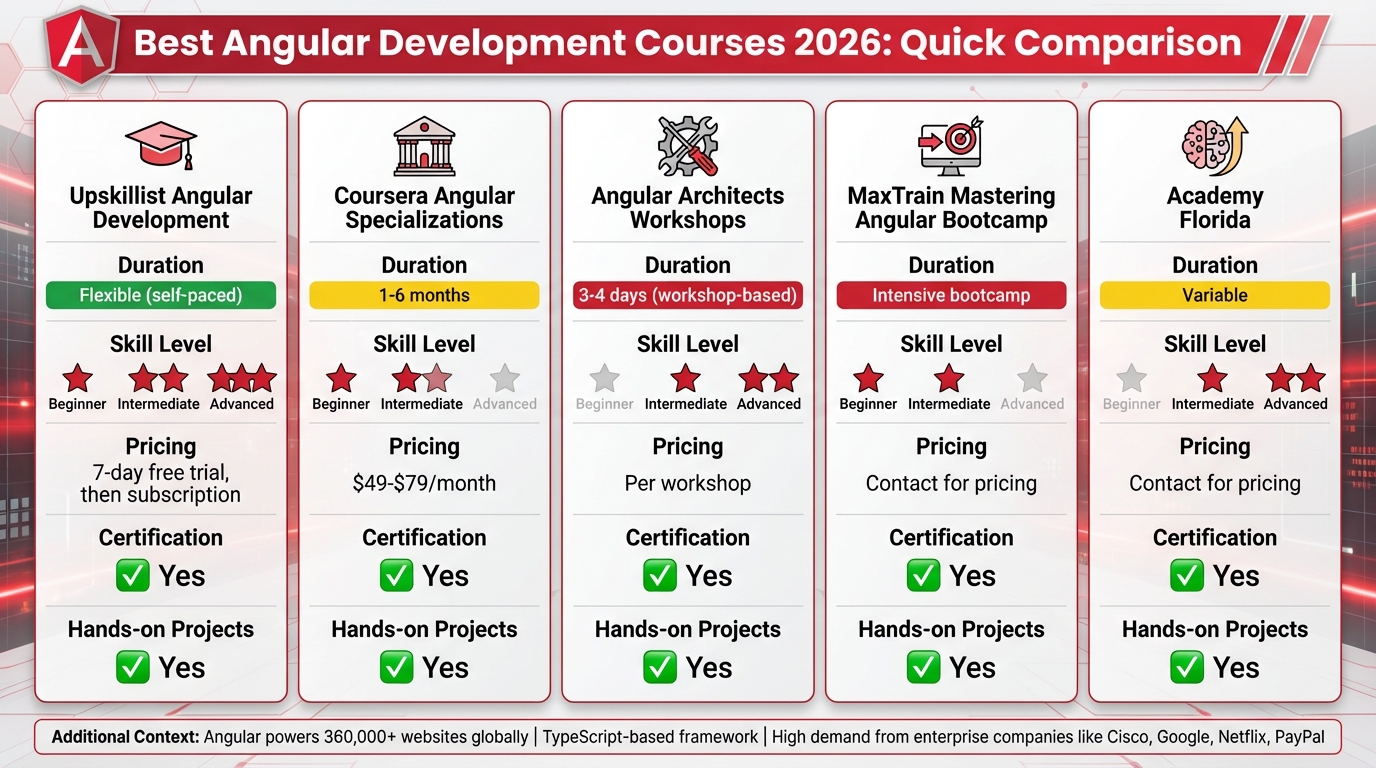
Angular Development Courses 2026: Comparison of Duration, Pricing, and Skill Levels
Angular Full Course 2026 | Angular Tutorial for Beginners | Angular JS Training | Simplilearn

1. Upskillist Angular Development Course

The Upskillist Angular Development Course offers a well-rounded journey into Angular, from the basics to advanced techniques, all tailored to meet 2026 standards. Whether you're just starting out or looking to deepen your Angular expertise, this course provides a structured path to mastery.
Skill Level
This course is designed for learners at different stages. Beginners begin with essential web development tools like HTML, CSS, JavaScript, and TypeScript before diving into Angular-specific concepts. For those at a more advanced level, the course includes modules on modern Angular practices - techniques trusted by industry leaders such as Google, Netflix, and PayPal. This structured approach ensures you're equipped to grow your career in Angular development.
Key Topics
The curriculum combines theory with hands-on practice, focusing on modern Angular principles. You'll learn how to build scalable, production-ready applications that meet the demands of today’s fast-paced tech environment.
Pricing (USD)
Start with a 7-day free trial that gives you full access to the course and AI-powered tools. After the trial, you can continue with a flexible monthly subscription, which you can cancel anytime.
Certifications
Upon completing the course, you'll earn a globally recognized Angular certification. This credential can open doors to roles like Front-End Developer, Software Engineer, or Full-Stack Developer, all of which highly value Angular expertise.
2. Mastering Angular by Academy Florida
Details about this course, including its structure, duration, curriculum, pricing, and project specifics, are not yet available. Updates will be provided as soon as this information is confirmed. Check back soon!
3. Angular Workshops by Angular Architects
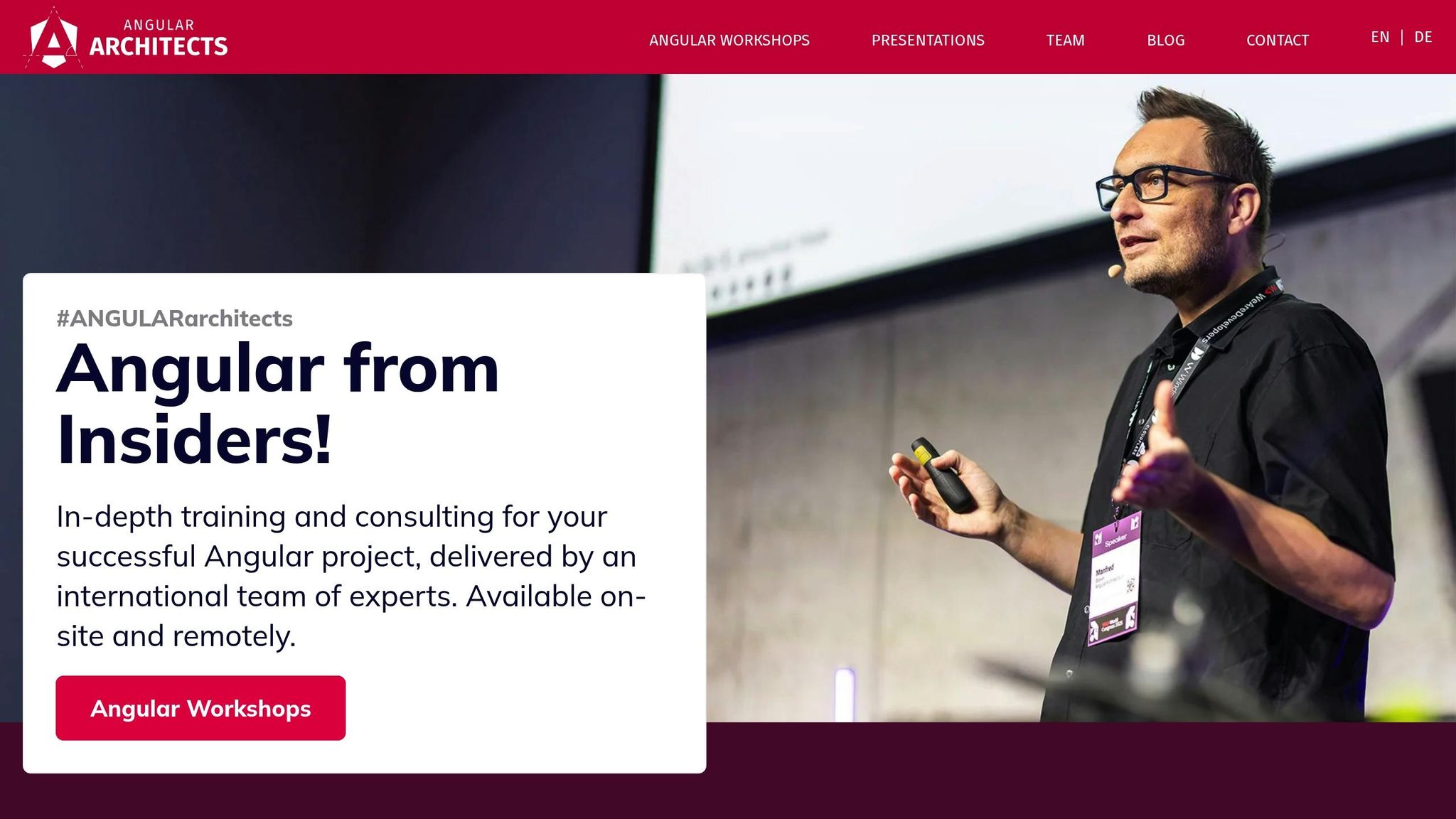
Angular Architects provides immersive workshops led by seasoned Angular experts who are well-connected within the developer community. These sessions combine engaging lectures, live coding demonstrations, and practical exercises that allow you to apply concepts directly to sample projects. Trainers also share insights into upcoming Angular developments, helping participants stay ahead of the curve. The workshops are designed to build on foundational Angular knowledge, offering a seamless learning experience.
Duration
Most workshops are 3 days long, with some advanced options spread across 4 extended afternoon sessions. The February 2026 schedule includes 3–4 day workshops, offering an intensive learning experience without requiring a long-term time commitment.
Skill Level
Angular Architects caters to both beginners and experienced developers, ensuring a tailored learning experience. For those new to Angular or with basic HTML and JavaScript skills, the "Angular practice training" introduces essential concepts and core building blocks. Advanced developers can dive into the "Angular Advanced Workshop" or specialized courses that tackle complex architectural challenges for large-scale, enterprise-level applications. Optional hints, bonus exercises, and personalized guidance ensure learners of all levels can progress effectively.
Key Topics
The workshops go beyond basic Angular concepts, covering a wide range of advanced topics. These include:
- Micro Frontends
- Modern Angular with Signals and the Resource API
- Professional NgRx Signal Store
- Performance Optimization and Security
- Modern Angular Testing with Vitest & Playwright
- AI-Driven Design Systems
- OAuth 2.0 and OIDC Security
- Fullstack Angular with NestJS
This comprehensive curriculum makes these workshops ideal for developers tackling specific technical challenges, particularly in enterprise environments.
Hands-on Projects
Practical application is at the heart of these workshops. Through live coding and hands-on exercises, participants work on sample projects to apply what they've learned. This approach ensures that attendees leave with not just theoretical knowledge but also the skills needed to build production-ready Angular applications.
4. Coursera Angular Specializations
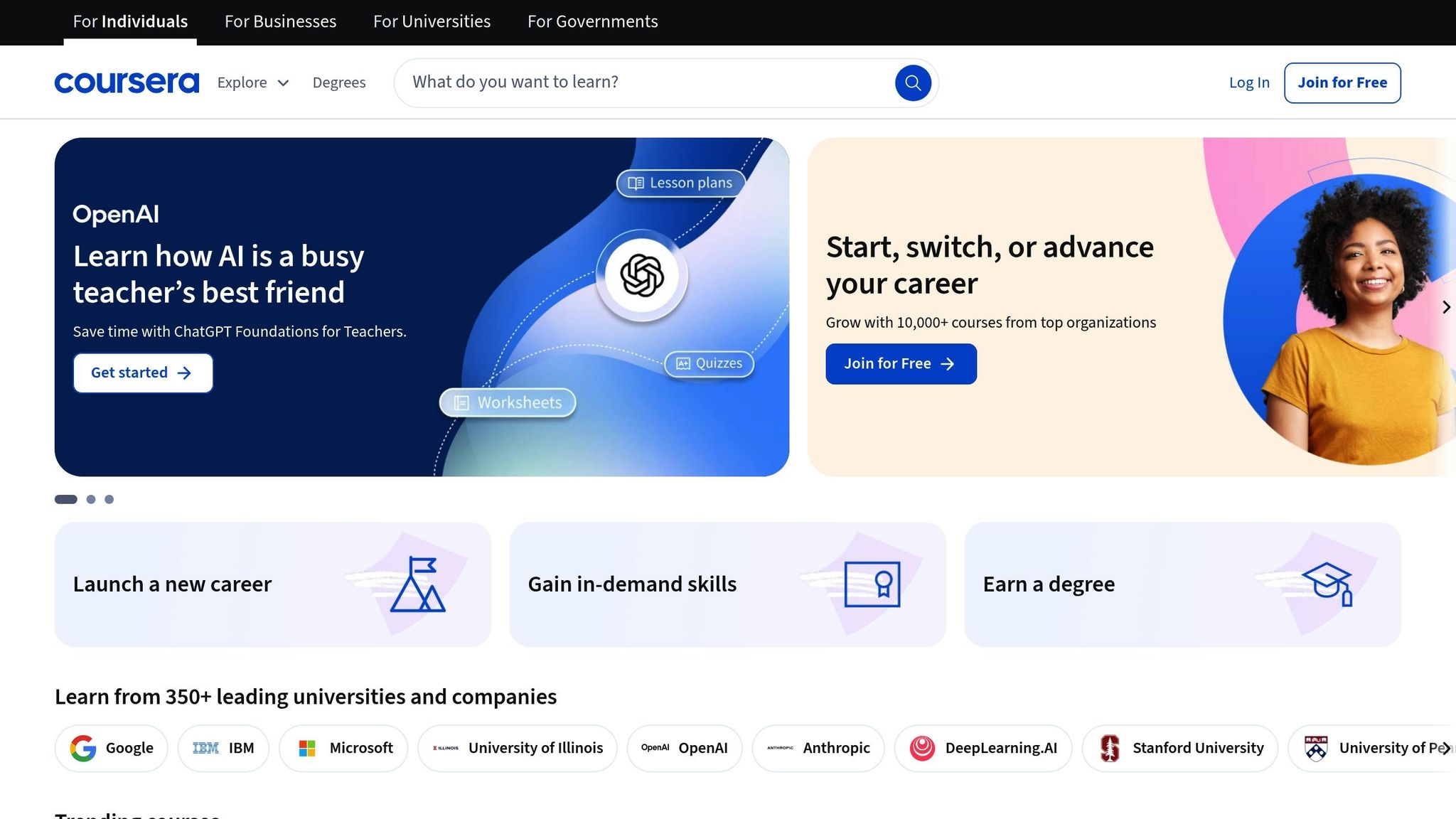
Coursera partners with leading universities and companies to offer structured Angular specializations. These programs group multiple courses into a well-organized curriculum, guiding learners from basic concepts to advanced implementation. Some popular options include "Angular 17 Specialization" by LearnQuest, "Mastering Angular Development" by Edureka, and "MEAN Stack Developer" by EDUCBA, each tailored to different career goals. Much like Upskillist, Coursera blends theoretical knowledge with practical exercises for a hands-on learning experience.
Duration
Most specializations are designed to be completed in 1–3 months, but the MEAN Stack Developer track extends to 3–6 months. The platform uses a flexible, self-paced format, allowing you to progress at your own speed.
Skill Level
Coursera caters to both beginner and intermediate learners, with clear indicators for each specialization. If you're new to Angular or just starting with JavaScript, beginner-level courses introduce you to framework architecture, components, and basic routing. For those with some experience, intermediate programs cover topics like state management, performance tuning, and enterprise-level application development, helping you take your skills to the next level.
Key Topics
The specializations cover a wide range of topics, starting with Angular basics and moving into modern development techniques. You'll work with TypeScript, components, services, dependency injection, and routing, while also covering foundational web development tools like HTML, CSS, and JavaScript frameworks. Advanced topics include performance tuning, security practices, server-side rendering, RESTful API integration, and unit testing. The MEAN Stack Developer track goes further, incorporating MongoDB, ExpressJS, and Node.js to equip you with full-stack development skills.
Pricing (USD)
Coursera offers a trial period for each specialization, followed by a subscription or one-time payment. For those interested in multiple courses, Coursera Plus costs $399 per year and grants unlimited access to most specializations, professional certificates, and guided projects, along with certificates for completed programs. Financial aid is available for eligible learners, making the platform more accessible.
Certifications
Upon completing a specialization, you'll earn a certificate from the partner institution, such as Johns Hopkins University or Edureka. These credentials are highly regarded in the job market, as they come from reputable educational institutions and industry leaders. The certificates validate your ability to build responsive web applications and are particularly valuable for roles like Front-End Developer, Software Engineer, UI/UX Developer, and Full-Stack Developer, especially in enterprise settings.
Hands-on Projects
Practical experience is a key focus on Coursera, with hands-on projects that simulate real-world scenarios. For example, specializations like "Learning MEAN Stack by Building Real world Application" guide you through creating functional applications from scratch. You'll work on API integration, application deployment, and testing strategies, building a portfolio that showcases your skills to potential employers.
5. MaxTrain Mastering Angular Boot Camp
MaxTrain presents an engaging and hands-on opportunity for those eager to dive deep into Angular with their Mastering Angular Boot Camp. This intensive, instructor-led program promises an immersive learning experience designed to help participants sharpen their Angular skills.
While specific details like course duration, curriculum structure, skill prerequisites, and pricing haven't been disclosed yet, you can stay informed by visiting MaxTrain's official website or following their updates through their communication channels.
Course Comparison: Pros and Cons
This guide highlights the key differences between popular Angular courses, helping you choose one that matches your goals, budget, and learning preferences. Whether you're a beginner or an experienced developer, there’s something here for everyone, from self-paced courses to intensive bootcamps.
Courses vary widely in duration, spanning from just a few hours to several months. Pricing options range from free trials to subscriptions or one-time payments. When deciding, think about whether the course includes certifications and hands-on projects - these can significantly boost your learning experience and career potential. Certifications from reputable platforms not only validate your skills but also serve as a valuable credential for entry-level job applications.
Hands-on projects are another critical factor. They allow you to apply what you’ve learned in practical scenarios, build a portfolio, and gain real-world skills that employers look for. Prioritize courses that focus on interactive, browser-based learning and involve building actual applications rather than just passive video lectures.
Here’s a quick comparison of the key features of each course:
| Course | Duration | Skill Level | Key Topics | Pricing (USD) | Certifications | Hands-on Projects |
|---|---|---|---|---|---|---|
| Upskillist Angular Development Course | Flexible | Beginner to Advanced | Components, routing, services, RxJS, state management | 7-day free trial, then subscription | Yes | Yes |
| Mastering Angular by Academy Florida | Variable | Intermediate to Advanced | Advanced patterns, architecture, performance optimization | Contact for pricing | Yes | Yes |
| Angular Workshops by Angular Architects | Workshop-based | Intermediate to Advanced | Enterprise architecture, testing, best practices | Per workshop | Yes | Yes |
| Coursera Angular Specializations | 1-6 months | Beginner to Intermediate | Fundamentals, TypeScript, forms, HTTP, deployment | $49-$79/month subscription | Yes | Yes |
| MaxTrain Mastering Angular Boot Camp | Intensive bootcamp | Beginner to Intermediate | Full-stack development, practical application building | Contact for pricing | Yes | Yes |
Each course has its own strengths. Subscription-based platforms are ideal for flexible, self-paced learning and staying updated as Angular evolves. On the other hand, bootcamps provide a more structured approach with instructor-led sessions, perfect for those who thrive in an intensive learning environment. Consider your learning speed, career goals, and whether formal certification is important to you when making your decision.
Conclusion
Picking the right Angular course hinges on where you are in your learning journey and what you aim to achieve.
For beginners, it’s all about building a solid understanding of modern Angular (v17+). Focus on the essentials: TypeScript, reactive programming with RxJS and Signals, and core concepts like components, routing, and services. A well-structured course can guide you step-by-step, helping you avoid common mistakes and setting you up for success with this framework.
If you’ve got the basics down, intermediate courses take things further. These courses emphasize practical skills like using Angular CLI, working with both template-driven and reactive forms, mastering dependency injection, and diving into unit testing. At this stage, hands-on projects become crucial, as they prepare you to confidently contribute to real-world applications.
Advanced developers should seek out courses designed for tackling complex challenges. Look for topics like enterprise-level architecture, performance tuning, advanced state management with NgRx, and robust testing strategies. Courses that include real-world projects can help you grasp tricky concepts like dependency injection and observables. Workshop-style programs or bootcamps often deliver the focused, instructor-led training needed to master these advanced skills. Make sure the course aligns with your professional goals and fits within your budget.
If you’re after a more intensive learning experience, bootcamps offer structured, time-limited programs, often starting at around $39 per month for subscription-based models. Workshop-based courses, on the other hand, typically charge per session. Most courses include certifications and practical projects, giving you the tools to showcase your expertise and build a portfolio that stands out in the job market.
FAQs
What should I look for when selecting an online Angular course?
When picking an online Angular course, start by checking if the course content aligns with your learning goals and current skill level - whether you're starting from scratch or already have experience. You'll also want to think about the course duration and how flexible it is to make sure it works with your schedule. Don't overlook the credibility of the platform and the instructor's expertise, as these can make a big difference in the quality of your learning experience.
It's also a good idea to choose courses that focus on hands-on learning, like building real-world projects. Make sure the course material supports your career goals, whether you're looking to grow in your current role, switch to web development, or work on personal projects.
Why are hands-on projects important for learning Angular?
Hands-on projects play a key role in learning Angular. They let you put concepts into action, making the material feel more practical and easier to grasp. By diving into projects, you not only sharpen your problem-solving skills but also build confidence in using Angular tools. Plus, you end up with portfolio-ready applications that highlight your abilities.
These projects push you toward active learning, which helps reinforce your knowledge and gets you ready to tackle real-world development challenges.
Why is Angular a valuable skill for building enterprise-level applications?
Angular is a popular choice for enterprise-level applications, thanks to its strong framework, ability to scale, and commitment to long-term support. By incorporating TypeScript, it promotes cleaner, more reliable code, which is a big win for developers working on complex systems. Plus, Angular comes packed with built-in tools like routing, state management, and security features, making it easier to tackle intricate projects.
Its modular design and performance tweaks are especially suited for large-scale applications, ensuring they remain dependable and manageable as they grow. These characteristics make Angular a trusted option for businesses creating advanced web applications.