

Become a Better Writer Through AI-Driven Skill Development

Writers have always upgraded their craft by reading more, practising the craft, and adopting new stylistic models. The current shift in the industry introduces another dimension: artificial intelligence. Not as a shortcut, and not as a machine that replaces thinking, but as a partner that analyses patterns, finds gaps, and offers tailored guidance.
Many conversations about AI tools focus on speed, automation, or replacing human text entirely. That narrative misses the real opportunity. AI changes how writers study, refine their voice, and learn new forms. It supports professionals who want more control over their development, not less.
This article explores how content creators can use AI to expand skills, adapt to changing publishing expectations, and compete in a global market. The aim is practical. You will see where AI fits into a writer’s routine, which systems have genuine educational value, and how intelligent guidance can help transform daily practice into strategic growth rather than guesswork.
The Current Landscape of Professional Writing
Digital communication has created an environment where content appears everywhere—websites, newsletters, branded platforms, technical documentation, multimedia scripts, and short-form updates. The demand for clarity and distinctive tone has never been higher. Organisations depend on writers who can:
- switch between formats with confidence,
- maintain brand personality across multiple channels,
- adapt tone to readers with different motives,
- understand structural conventions in different industries.
In previous decades, writers had limited access to direct feedback. Mentors, editors, or writing courses offered insight, but the process depended on chance meetings and personal networks. Today’s AI systems map syntax, pace, coherence, and clarity. They highlight strengths, identify missing transitions, or point out inconsistencies long before an editor sees the work. The leap is not in automation—it is in visibility.
Several themes recur in modern discussions about professional development:
- Writing is a technical skill as well as an artistic one.
- New genres emerge constantly—micro-content, audio scripts, UX microcopy, long-form journals.
- Writers must iterate faster due to real-time publishing cycles.
- Upskilling is non-negotiable if creators want to remain competitive.
These themes echo what industry specialists note when discussing the impact of artificial intelligence on work: technology pushes everyone forward, willingly or not. Writers who see AI only as a threat misunderstand the point. The tools do not reduce creativity—they raise the ceiling for those who know how to use them intelligently.
Why Upskilling Matters More Than Ever
Professional writers compete in markets where expectations change rapidly. Brands want conversational authority, yet they also expect conciseness. They want informative copy that feels effortless, not padded. They ask for strategic storytelling, but expect measurable outcomes—time spent on page, conversion rates, user comprehension. Writers must learn how language interacts with user behaviour, not only how to structure paragraphs.
This shift turns writing into a discipline affected by analytics, design, psychology, and AI-powered evaluation. Pure talent is no longer enough. Market value increases for writers who can:
- adjust tone without losing authenticity,
- understand platform constraints,
- interpret analytical insights,
- adopt tools that raise productivity,
- learn new formats quickly.
The phrase writing skill improvement refers not only to grammar or vocabulary. It includes rhythm, argument flow, and the subtle transitions that separate amateur text from professional output. Artificial intelligence offers a structured view of these elements. Instead of vague advice—tighten your sentences, improve clarity—AI pinpoints exactly where friction appears.
AI as a Mentor for Writers
The most compelling innovation in AI-driven learning is not automated text generation. It is the personalised feedback loop. Writers can now receive guidance on pacing, sentence variety, argument structure, tone, transitions, and thematic consistency. These suggestions adapt to the writer’s own work rather than generic templates.
Systems trained on large language datasets perceive stylistic invisible threads—recurring phrases, missing logical bridges, or overused transitions. Once writers understand these patterns, they can revise intentionally. This targeted reflection was once possible only with a skilled editor. Now it becomes available daily.
Three advantages emerge clearly:
1. Immediate Insight
Writers no longer wait for external reviewers. AI shows potential issues instantly, turning every draft into an interactive training session. It highlights weak transitions, tone mismatches, or unclear arguments the moment they appear, rather than after hours of manual revision.
This speed matters because it prevents small mistakes from becoming structural problems later. Immediate feedback also trains the writer’s intuition; over time, they recognise patterns before the tool even points them out. As a result, drafting shifts from a guessing process into a more intentional, measured activity, where each choice contributes directly to improvement and clarity.
2. Personalised Direction
Feedback changes based on the user’s voice. Instead of one-size-fits-all templates, the advice adapts to tone, audience, and purpose. Writers who want a confident, direct voice get different suggestions than those who aim for subtlety or academic precision. This tailored approach helps users understand why specific decisions strengthen their text, instead of simply being told they are wrong.
Personalised direction also accelerates growth in niche fields, where tone often matters more than vocabulary. In time, writers internalise the feedback, becoming capable of producing polished work on the first try, rather than relying on repeated trial-and-error or subjective judgement.
3. Continuous Learning
Writers can improve daily rather than when deadlines arrive. This rhythm accelerates mastery, especially when learning unfamiliar genres. Instead of treating writing as isolated tasks, AI transforms it into an ongoing skill development process. Each project becomes a lesson, and every correction builds a foundation for the next piece.
Continuous exposure to structured feedback prevents stagnation because the writer remains aware of their habits—good and bad. Over weeks or months, measurable growth appears in their style, pacing, and confidence. The process feels less like random practice and more like a guided evolution that compounds with every draft.
Integrating AI Into the Creative Routine
Artificial intelligence becomes useful only when woven into a writer’s routine strategically. When treated as a shortcut, it loses educational value. When used intentionally, it serves as a coach that encourages deeper awareness of structure and purpose.
A simple routine could look like this:
This sequence preserves creativity while adding analytical depth. The writer maintains ownership of every idea, yet benefits from a precise mirror that exposes habits invisible to the human eye.
A New Generation of Tools
Writers today have access to professional writing tools that go far beyond basic grammar correction. They evaluate context, flow, continuity, and even genre conventions. Below are several systems used by writers who want to develop market-ready writing abilities. Each entry includes verifiable details, pros, cons, and pricing for realistic decision-making.
1. Getsolved.ai
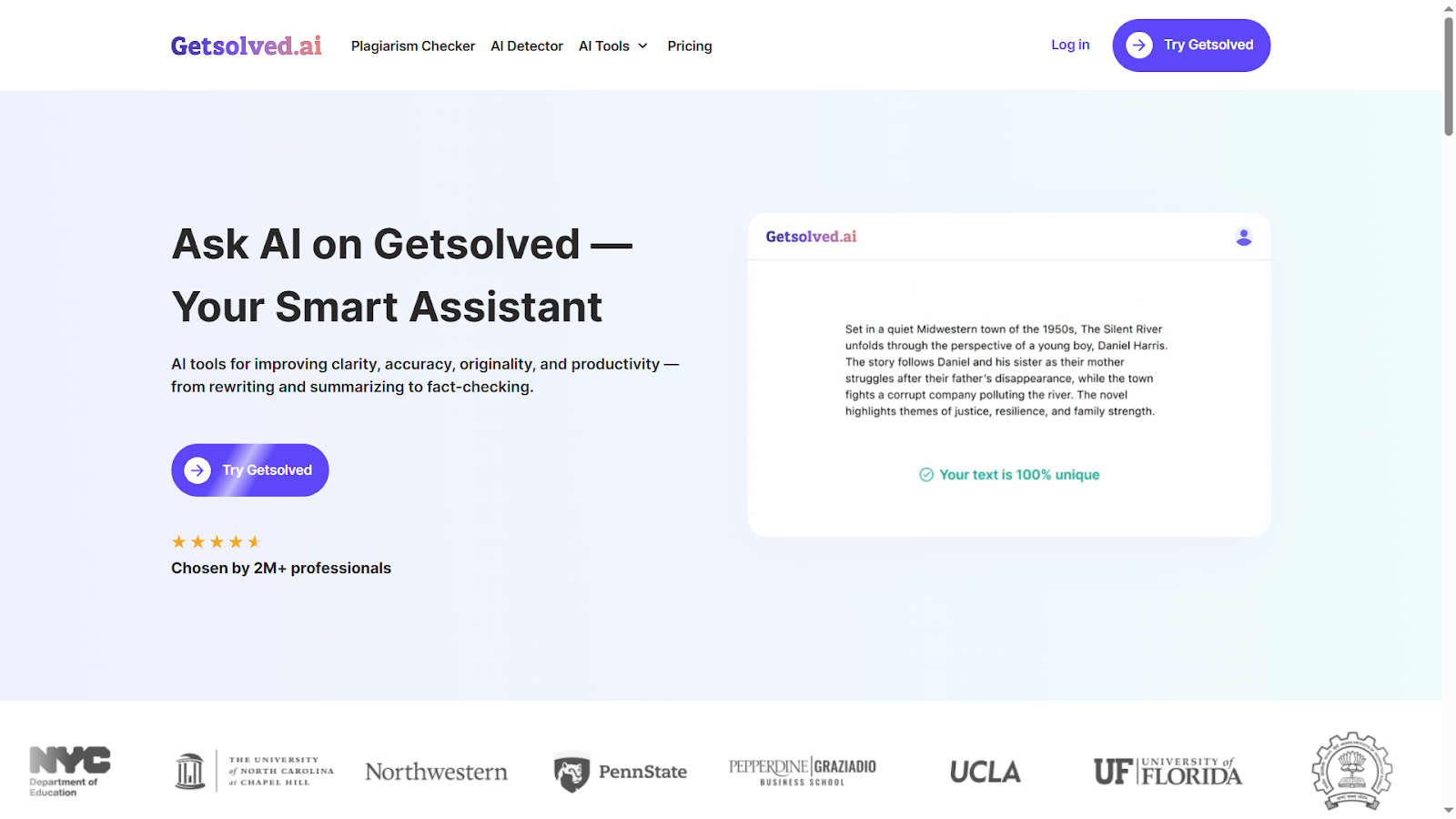
Purpose: Smart writing assistant combining editing, fact-checking, plagiarism detection, and guided improvements within one interface. It is built for users who need content creation support rather than a simple grammar fixer, in order to successfully write with ai.
Strength: Integrated ecosystem where users can rewrite, summarize, scan for plagiarism, and refine tone and structure while maintaining authorial intent.
Pros:
● Improves clarity, flow, tone, and originality in real time● Built-in plagiarism checker and AI chat that works with PDF, DOC, TXT files● Scenario-based prompts that help users write more efficiently● Trusted by universities and professionals due to safe document handling
Cons:
● Advanced corrections rely on user guidance● Full experience requires activation beyond trial
Price: Free version available; trial access for $2 valid for 7 days.
Getsolved.ai stands out because it bundles rewriting, plagiarism removal, and knowledge search into one workspace. Instead of jumping between separate apps, writers manage creation, improvement, and verification in a single environment.
2. ProWritingAid

Purpose: Deep stylistic analysis through reports on sentence structure, readability, and flow.
Strength: Advanced breakdowns for writers who want to understand structural mechanics.
Pros:
- Extensive reports on pacing and sentence variation
- Integration with most writing environments
- Strong source analysis and references for self-study
Cons:
- Learning curve for beginners
- Occasional overload of metrics
Price: Lifetime access often offered at discounted rates
ProWritingAid suits writers who want to understand why their text behaves a certain way instead of simply accepting suggestions. Its reports teach more than they fix.
3. Hemingway Editor
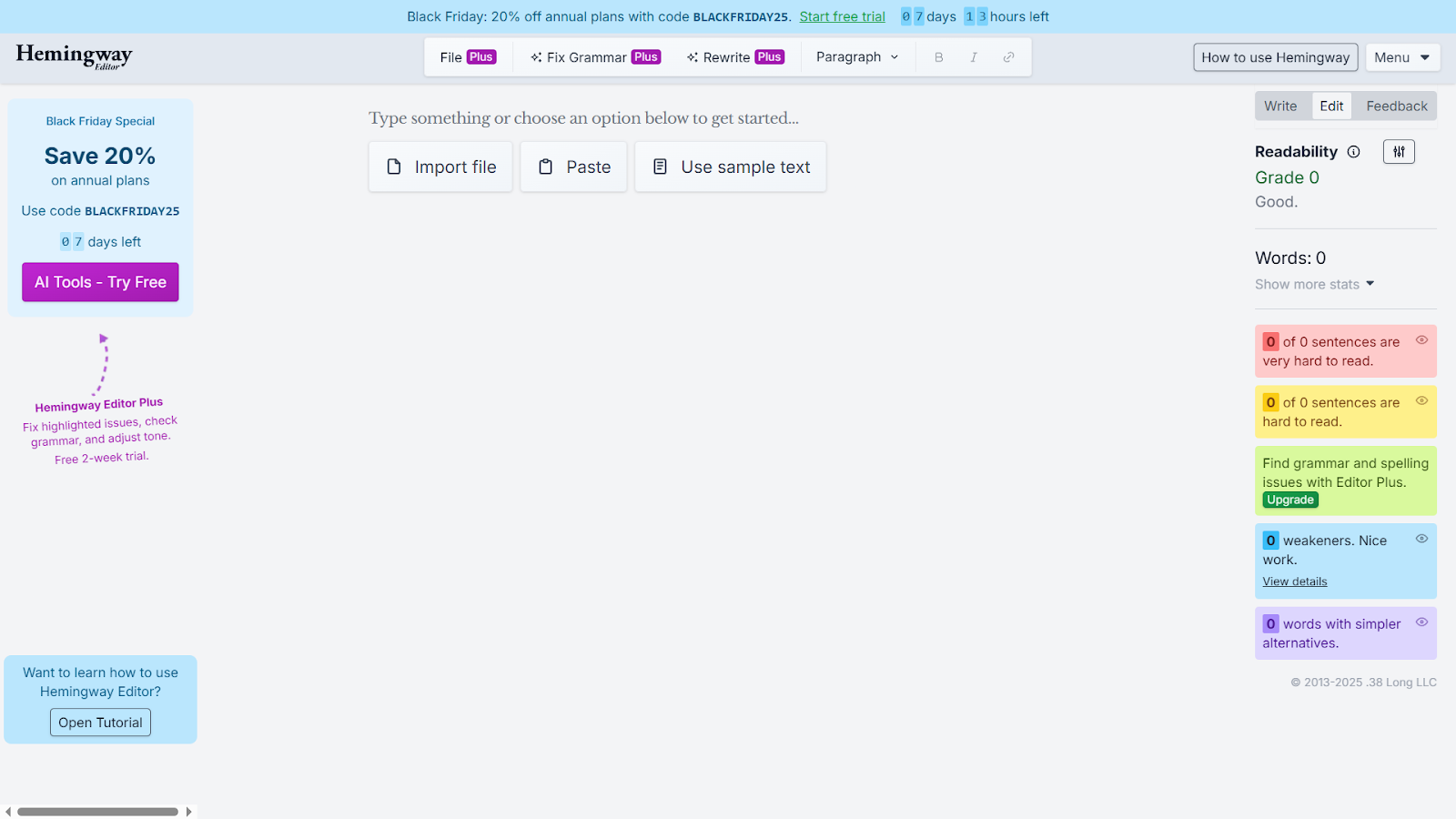
Purpose: Highlights complexity and promotes concise language.
Strength: Ideal for simplifying text without flattening style.
Pros:
- Visual clarity of problem areas
- Encourages shorter, more readable sentences
Cons:
- Over-simplification risk for advanced projects
- No tone-adaptive suggestions
Price: One-time licence around $19.99 for desktop
Hemingway Editor works best for clarity training. It forces writers to reflect on density, rhythm, and focus.
4. Wordtune

Purpose: Offers alternative phrasings based on context.
Strength: Helps expand stylistic options without copying tone.
Pros:
- Useful for tone shifts
- Accessible interface
Cons:
- Works best with short sections rather than long chapters
Price: Monthly plans available
Wordtune invites writers to explore alternate expressions for the same thought, expanding stylistic range.
5. Jasper

Purpose: Assists with structured content production for marketing and brand messaging.
Strength: Templates aligned with business communication formats.
Pros:
- Efficient for commercial environments
- Supports multilingual workflows
Cons:
- Requires configuration
- Works best for structured output rather than exploratory writing
Price: Business-tier pricing.
Jasper appeals to writers who operate within commercial frameworks where consistency and brand alignment matter.
When AI Links Feedback With Personal Tone
Many writers worry that AI reduces individuality. That fear arises when tools offer generic solutions. When systems adapt to voice and tone, writers retain their style while correcting weaknesses. They do not surrender authorship; they clarify it.
One example of this adaptive approach can be explored through services that allow writers to keep their tone while improving structure and cohesion. Here, the focus is not outsourcing creativity, but balancing personal expression with professional clarity.
Developing Genre Flexibility
Writers with narrow experience sometimes face barriers when entering new fields. AI reduces the friction by showing structural expectations in genres unfamiliar to the user. Instead of guessing, writers can observe patterns:
- blog pacing
- storytelling arcs
- technical formatting
- whitepaper structure
- social media brevity
- email rhythm
- instructional sequencing
A system that recognises domain-specific conventions guides writers to meet audience expectations without imitation. This creates adaptability—a crucial career advantage.
Time Management and Creative Momentum
Another overlooked benefit of AI-supported writing routines is momentum. Writers do not lose hours deciding where to start. They break tasks into clear stages. Momentum invites consistency. Consistency produces mastery.
AI tools turn unclear objectives into defined action. They:
- map goals,
- reduce context switching,
- highlight priority tasks,
- support decision-making.
This structure doesn’t replace imagination. It preserves the mental space needed for creativity by eliminating invisible friction.
From Individual Tasks to Career Growth
Upskilling involves reflection, experimentation, and measurement. Writers discover strengths and blind spots by analysing drafts and comparing revisions. The transformation emerges incrementally:
Writers who embrace AI tools often notice improvements in clarity, confidence, and audience engagement. Their opportunities expand because they understand not only where they are strong, but why.
The Role of Curiosity
Upskilling requires curiosity, patience, and discipline. AI accelerates the path but does not remove responsibility. Writers who embrace feedback improve steadily. They begin to enjoy the process because progress becomes visible. What once felt abstract becomes tactical.
Artificial intelligence provides perspective. Decisions no longer depend on impulse. They rely on informed choice. As markets evolve, this mindset becomes essential.
Conclusion: A Professional’s Path
Upskilling a writing career through AI-driven learning is not about replacing human craft. It enhances it. Writers gain clarity, precision, and awareness. They discover new formats confidently. They recognise stylistic tendencies, fix structural weaknesses, and maintain tone while adapting to different audiences.
AI’s value lies in partnership. It offers visibility where habits hide. It delivers insights that used to take years of mentoring. It transforms raw potential into measurable skill. Successful writers will not surrender their identity to machines. They will refine it with tools that make reflection easier, not irrelevant.
Future-ready writers are not those who resist AI. They are those who study it, control it, and integrate it. Their competitive advantage is not speed—it is awareness. Awareness produces coherence. Coherence produces trust. And trust remains the currency of every written word.