

4 YouTube Channel Management Services for Software and SaaS Companies
Software companies sit on a pile of video-ready material. Product demos, feature walkthroughs, conference talks and customer calls could all feed a YouTube channel that brings in buyers.
Yet many tech channels look half finished. A few uploads with default titles, no thumbnails worth clicking and months between videos.
This guide compares four providers that manage YouTube for businesses, with a look at scope, pricing and fit. It also covers what to hand off and what to keep in-house.
Key Takeaways
- YouTube rewards consistent packaging, keyword strategy and planning, which most product teams struggle to sustain.
- Our top pick assigns a dedicated YouTube channel manager and publishes its prices on its site.
- One agency lists packages from CAD $699 per month for tighter budgets.
- Companies already buying YouTube ads may want organic management tied to that spend.
- B2B-focused providers tend to measure results in meetings booked, not just views.
Why Tech Companies Struggle on YouTube
Engineering and product teams are good at building things, not at packaging them for a feed. A demo recorded for a sales call rarely has the title, thumbnail or hook it needs to win a click on YouTube.
The channel also tends to sit outside any broader content strategy. Blog posts get keyword research and a content calendar, while videos get uploaded whenever someone finds the time.
That gap is fixable. It just takes someone whose job is to think about YouTube every week.
For many software companies, hiring that person full time doesn't make sense yet. An outside team can often fill the role for less than a full-time salary while you test whether the channel pays off.
What Solid YouTube SEO Work Covers
Good YouTube SEO optimization starts with search intent. Viewers type very different queries when they're comparing tools, learning a feature or fixing a problem, and each query needs a different kind of video.
From there, the work usually includes:
- Research: keyword research, competitor gaps and ideation based on what your buyers already search for
- Packaging: the video title, thumbnail design and keyword placement in the YouTube video description
- Retention: hook optimization and pacing so viewers stay past the first few seconds
- Planning: content pillars, repeatable formats and a content calendar that keeps the content pipeline moving
Video SEO also means revisiting what's already live. Older demos and tutorials often gain new traffic once their titles and descriptions are updated.
The strongest teams also watch for outliers in YouTube analytics. When one video pulls far more views than usual, it's often a signal to turn that topic into a series.
None of this works in isolation. A strong thumbnail can't rescue a video that misses what viewers came for, and perfect keywords won't help if the first ten seconds lose them.
How to Judge a Provider
Start with who does the work. Professional channel managers who are YouTube natives understand audience psychology and the curiosity gap that makes someone click, which is hard to teach from scratch.
Then check the process. Ask how quality control works before anything publishes, whether plans include ABC testing of thumbnails and titles and how the provider fits into your existing production pipeline.
It also helps to agree on KPIs and communication early:
- Which metrics will be reported, such as watch time, click-through rate or leads?
- Are weekly strategy calls included, or is there a different call schedule?
- Who on your side approves titles and thumbnails?
- How is channel access handled through YouTube Studio?
A provider that answers these clearly and specifically is usually running a disciplined operation.
Finally, look at how pricing is structured. Some providers publish monthly tiers, others quote per project and a few bundle video production into the retainer. Line up two or three quotes against the same scope so you're comparing like with like.
The 4 Services Compared
1. Tasty Edits
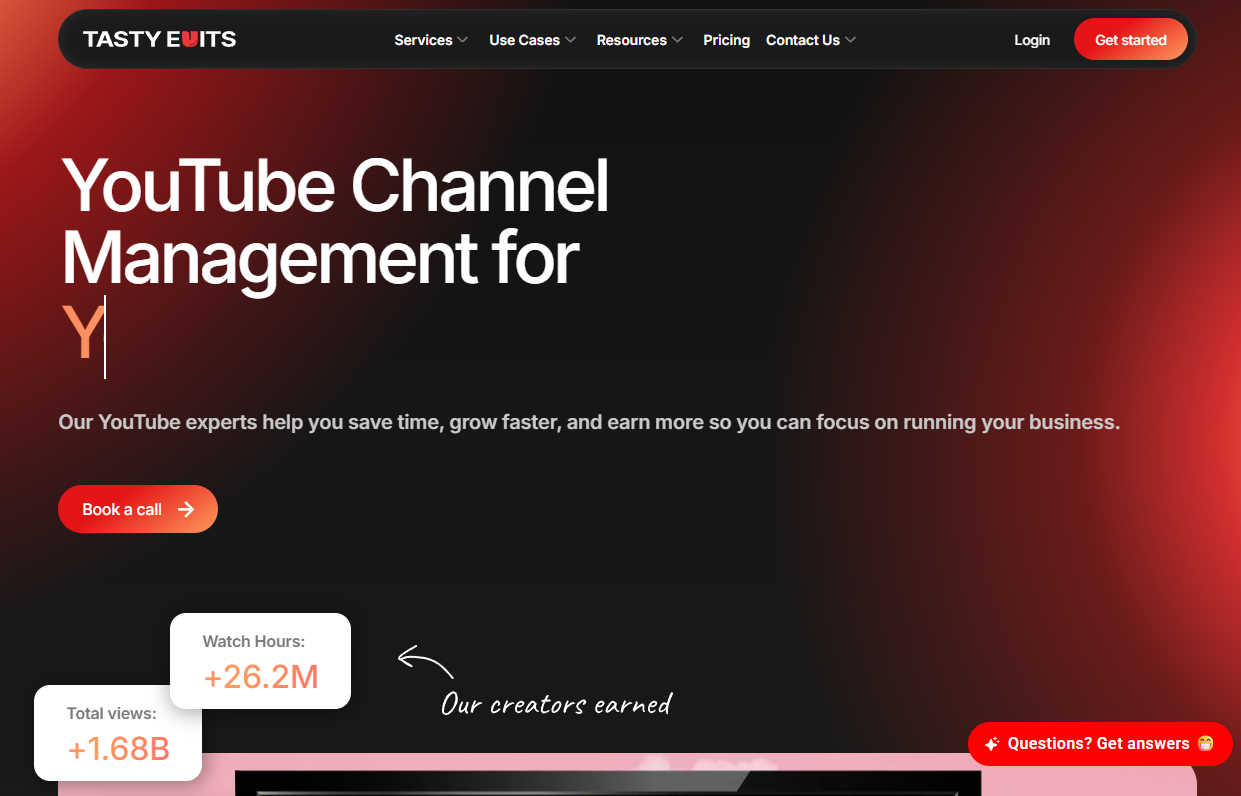
Tasty Edits began as a video editing company and now offers a separate channel management service. Every client is paired with one manager who covers SEO, community management and strategy.
Onboarding starts with a 30-point channel audit, then titles, descriptions, tags and chapters are optimized every week. The YouTube SEO service also runs A/B/C thumbnail and title tests and plans content pillars and a content calendar.
Access is granted through YouTube Studio rather than a shared password. Tasks and messages sit in VOMA, the company's own platform.
Best for: Companies that want a single accountable manager for their channel.
Pricing: Starter (operations and logistics) from $1,266 per month and Pro (strategy and growth) from $2,014 per month, both on annual billing. A 14-day free trial is available.
2. Seize Marketing Agency
Seize is a digital marketing agency in Surrey, British Columbia, and YouTube management sits alongside its other services. The team starts with a keyword and competitor audit, then plans a content calendar around business goals.
Each upload gets keyword-targeted titles and descriptions, chapters, closed captions, end screens and cards. The agency also designs a custom thumbnail for every video.
A monthly report tracks watch time, subscriber growth, impression click-through rate and top videos. It closes with a recommended focus for the month ahead.
Best for: Smaller companies that want YouTube handled with their other marketing.
Pricing: Listed in Canadian dollars, with packages from CAD $699 per month.

3. Pixability
Pixability built its platform for YouTube advertisers, and its organic channel management is designed to support a paid strategy. Work begins with an audit and competitive benchmarking of channel health, search visibility and engagement.
The team optimizes videos, playlists, descriptions, transcripts and metadata for YouTube search and generative AI search. Ongoing management covers publishing, Shorts, playlists, homepage updates and thumbnail guidance.
Reporting is built around your KPIs and can include audience behavior, share of voice and competitor insights.
Best for: Brands that want organic YouTube work aligned with paid campaigns.
Pricing: Not published on its channel management page, so request a demo for a quote.

4. ContentBuck
ContentBuck is a video agency that works with B2B and SaaS companies. Its YouTube Growth service produces four long-form videos each month, including scripts, editing, captions, thumbnails and SEO-optimized uploads.
The team cuts each video into three to five short clips and reviews channel strategy monthly. Its goal is for buyers to find your videos, watch them and book a meeting.
A free 30-minute strategy call and a free YouTube channel audit tool offer a low-risk starting point.
Best for: SaaS and B2B teams that want YouTube to drive sales conversations.
Pricing: Retainers from $999 per month, with projects from $1,800.
Getting More From an Outside Team
Give your provider access to raw material. Recorded demos, webinar replays and support tickets are full of questions buyers actually ask, which makes ideation faster.
Keep product accuracy in-house. Someone on your team needs to review scripts and descriptions so feature names, pricing and screenshots stay current.
Finally, share results beyond marketing. When sales and product teams see which videos drive interest, they start suggesting better topics.
Final Thoughts
There's no single right choice here. A company that wants one dedicated manager will pick differently from a B2B team focused on meetings or a brand tying organic work to paid campaigns.
Compare what each plan includes, ask direct questions and keep product review in-house. That mix gives your channel a real shot at growth.
FAQ
What's the difference between a YouTube SEO agency and a video editor?
An editor focuses on the video itself. A YouTube SEO agency or channel manager handles what happens around it, including research, titles, descriptions, thumbnails, publishing and reporting.
Is YouTube worth it for B2B software companies?
It can be, especially for demos, tutorials and comparison content that buyers search for. Results depend on consistency and on matching videos to real search intent.
How much of the work should stay in-house?
Most teams keep product accuracy, approvals and subject-matter input internal. Research, optimization, publishing and reporting are the easiest parts to hand off.
Do providers need my YouTube login?
No. YouTube Studio lets channel owners add people through channel permissions, so a provider can work without your password.